HELP SAVE THE WORLD TODAY

EDUCATION IS THE MOST POWERFUL WEAPON WHICH YOU CAN USE TO CHANGE THE WORLD.

RICH_SCI_DATES

I LOVE YOU BECAUSE YOU'RE AWESOME JUST LIKE ME!

GIVE'S YOU THE BETTER...

FRIENDSHIP... IS NOT SOMETHING YOU LEARN IN SCHOOL. BUT IF YOU HAVEN'T LEARNED THE MEANING OF FRIENDSHIP, YOU REALLY HAVEN'T LEARNED ANYTHING.

DO YOU KNOW...

THE PERSON WHO YOU'RE WITH MOST IN LIFE IS YOURSELF AND IF YOU DON'T LIKE YOURSELF YOU'RE ALWAYS WITH SOMEBODY YOU DON'T LIKE.

MAKING IT HAPPEN

WHERE JUSTICE IS DENIED, WHERE POVERTY IS ENFORCED, WHERE IGNORANCE PREVAILS, AND WHERE ANY ONE CLASS IS MADE TO FEEL THAT SOCIETY IS AN ORGANIZED CONSPIRACY TO OPPRESS, ROB AND DEGRADE THEM, NEITHER PERSONS NOR PROPERTY WILL BE SAFE.

Wednesday, January 10, 2018

Taiwanese police give cyber-security quiz winners infected devices

Police have apologized after giving infected memory sticks as prizes in a government-run cyber-security quiz.

Taiwan's national police agency said 54 of the flash drives it gave out at an event highlighting a government crime crackdown contained malware.
The virus, which can steal personal data and has been linked to fraud, was added inadvertently, it said.
The Criminal Investigation Bureau (CIB) apologized for the error and blamed the mishap on a third-party contractor.
It said 20 of the drives had been recovered.
 
 
Around 250 flash drives were given out at the expo, which was hosted by Taiwan's Presidential Office from 11-15 December and aimed to highlight the government determination to crack down on cyber crime.

Cyber-fraud ring

All the drives were manufactured in China but the CIB ruled out state-sponsored espionage, saying instead that the bug had originated from a Taiwan-based supplier.
It said a single employee at the firm had transferred data onto 54 of the drives to "test their storage capacity", infecting them in the process.
The malware, identified as the XtbSeDuA.exe program, was designed to collect personal data and transmit it to a Polish IP address which then bounces it to unidentified servers.
The CIB said it had been used by a cyber-fraud ring uncovered by Europol in 2015.
Only older, 32-bit computers are vulnerable to the bug and common anti-virus software can detect and quarantine it, it said.
The server involved in the latest infections had been shut down, it said.
In May, IBM admitted it had inadvertently shipped malware-infected flash drives to some customers.
The computer maker said drives containing its Storwize storage system had been infected with a trojan and urged customers to destroy them.
At the time, it declined to comment on how the malware ended up on the flash drives or how many customers had been affected.
The trojan, part of the Reconyc family, bombards users with pop-ups and slows down computer systems.
It is known to target users in Russia and India.

Sunday, December 31, 2017

NASA warning: ‘Unseen’ asteroid set to skim Earth


EXCLUSIVE: NASA is closely monitoring the arrival of a previously unseen asteroid that is set to brush past Earth today at 21,362 miles per hour.

The space rock had been invisible to astronomers until Christmas Day when it was first identified.
Now called asteroid2017 YZ4, it will come past us between the Earth and the Moon at a distance of just 139,433 miles.
The Moon is 238,000 miles from Earth, and this pass is considered a cat’s whisker in astronomical terms.
NASA considers and monitors anything which comes within six million miles of our planet as a near earth asteroid.
This year, we discovered 1,985 new near Earth asteroids. There were 1888 such objects discovered in 2016 and 1,571 in 2015.
NASA spokesman
 

Wednesday, August 16, 2017

Mystery of how first animals appeared on Earth solved

Research has solved the mystery of how the first animals appeared on Earth, a pivotal moment for the planet without which humans would not exist.

Research led by The Australian National University (ANU) has solved the mystery of how the first animals appeared on Earth, a pivotal moment for the planet without which humans would not exist.
Lead researcher Associate Professor Jochen Brocks said the team found the answer in ancient sedimentary rocks from central Australia.
"We crushed these rocks to powder and extracted molecules of ancient organisms from them," said Dr Brocks from the ANU Research School of Earth Sciences.
"These molecules tell us that it really became interesting 650 million years ago. It was a revolution of ecosystems, it was the rise of algae."
Dr Brocks said the rise of algae triggered one of the most profound ecological revolutions in Earth's history, without which humans and other animals would not exist.
"Before all of this happened, there was a dramatic event 50 million years earlier called Snowball Earth," he said.
"The Earth was frozen over for 50 million years. Huge glaciers ground entire mountain ranges to powder that released nutrients, and when the snow melted during an extreme global heating event rivers washed torrents of nutrients into the ocean."
Dr Brocks said the extremely high levels of nutrients in the ocean, and cooling of global temperatures to more hospitable levels, created the perfect conditions for the rapid spread of algae. It was the transition from oceans being dominated by bacteria to a world inhabited by more complex life, he said.
"These large and nutritious organisms at the base of the food web provided the burst of energy required for the evolution of complex ecosystems, where increasingly large and complex animals, including humans, could thrive on Earth," Dr Brocks said.
The research is published in Nature, and the findings will be presented at the Goldschmidt Conference in Paris, France, this week.
Co-lead researcher Dr Amber Jarrett discovered ancient sedimentary rocks from central Australia that related directly to the period just after the melting of Snowball Earth.
"In these rocks we discovered striking signals of molecular fossils," said Dr Jarrett, an ANU Research School of Earth Sciences PhD graduate.
"We immediately knew that we had made a ground-breaking discovery that snowball Earth was directly involved in the evolution of large and complex life."

Wednesday, July 12, 2017

Creating music by thought alone

Newly-developed hands-free musical instrument now allows people to make music with their minds.

Neurologists have created a hands-free, thought-controlled musical instrument. They hope that this new instrument will help empower and rehabilitate patients with motor disabilities such as those from stroke, spinal cord injury, amputation, or amyotrophic lateral sclerosis (ALS).

The Encephalophone is a musical instrument that you control with your thoughts, without movement," explains Thomas Deuel, a neurologist at Swedish Medical Center and a neuroscientist at the University of Washington, and first author of the report.
"I am a musician and neurologist, and I've seen many patients who played music prior to their stroke or other motor impairment, who can no longer play an instrument or sing," says Deuel. "I thought it would be great to use a brain-computer instrument to enable patients to play music again without requiring movement."
The Encephalophone collects brain signals through a cap that transforms specific signals into musical notes. The invention is coupled with a synthesizer, allowing the user to create music using a wide variety of instrumental sounds.
Dr. Deuel originally developed the Encephalophone (patent pending) in his own independent laboratory, in collaboration with Dr. Felix Darvas, a physicist at the University of Washington. In this first report, they describe their development of the instrument, as well as their initial studies showing evidence of how easily the instrument might be used. This preliminary study showed that a trial group of 15 healthy adults were able to use the instrument to correctly recreate musical tones, with no prior training.
"We first sought to prove that novices -- subjects who had no training on the Encephalophone whatsoever -- could control the device with an accuracy that was better than random," says Deuel. "These first subjects did quite well, way above chance probability on their very first try.
The Encephalophone can be controlled via two independent types of brain signals: either those associated with the visual cortex (i.e. closing one's eyes), or those associated with thinking about movement. Control by thinking about movement may be the most useful for disabled patients, and Deuel plans to continue researching this application. But for now, this current study shows that, at least for this small group of novice users, control by eye closing is more accurate than control by imagining movements.
The Encephalophone is based on brain-computer interfaces using an old method, called electroencephalography, which measures electrical signals in the brain. Scientists first began converting these signals into sounds in the 1930s and, later, into music in the 1960s. But these methods were still difficult to control and were not easily accessible to non-specialist users.
In a collaboration with the Center for Digital Arts and Experimental Media (DXARTS), Deuel has built upon such research to make the Encephalophone more musically versatile, as well as easier to use.
Deuel and his collaborators are already working with more people to see how much users can improve with training. Deuel also plans to begin clinical trials of the Encephalophone later this year to see whether it may be useful or enjoyable for disabled patients.
"There is great potential for the Encephalophone to hopefully improve rehabilitation of stroke patients and those with motor disabilities," Deuel says.

Saturday, July 1, 2017

Cocoa and chocolate are not just treats -- they are good for your cognition

Cocoa can be seen as a dietary supplement to protect human cognition and can counteract different types of cognitive decline.
Researchers have examined the available literature for the effects of acute and chronic administration of cocoa flavanols on different cognitive domains. It turns out that cognitive performance was improved by a daily intake of cocoa flavanols.
 
A balanced diet is chocolate in both hands -- a phrase commonly used to justify ones chocolate snacking behavior. A phrase now shown to actually harbor some truth, as the cocoa bean is a rich source of flavanols: a class of natural compounds that has neuroprotective effects.
In their recent review published in Frontiers in Nutrition, Italian researchers examined the available literature for the effects of acute and chronic administration of cocoa flavanols on different cognitive domains. In other words: what happens to your brain up to a few hours after you eat cocoa flavanols, and what happens when you sustain such a cocoa flavanol enriched diet for a prolonged period of time?
Although randomized controlled trials investigating the acute effect of cocoa flavanols are sparse, most of them point towards a beneficial effect on cognitive performance. Participants showed, among others, enhancements in working memory performance and improved visual information processing after having had cocoa flavanols. And for women, eating cocoa after a night of total sleep deprivation actually counteracted the cognitive impairment (i.e. less accuracy in performing tasks) that such a night brings about. Promising results for people that suffer from chronic sleep deprivation or work shifts.
It has to be noted though, that the effects depended on the length and mental load of the used cognitive tests to measure the effect of acute cocoa consumption. In young and healthy adults, for example, a high demanding cognitive test was required to uncover the subtle immediate behavioral effects that cocoa flavanols have on this group.
The effects of relatively long-term ingestion of cocoa flavanols (ranging from 5 days up to 3 months) has generally been investigated in elderly individuals. It turns out that for them cognitive performance was improved by a daily intake of cocoa flavanols. Factors such as attention, processing speed, working memory, and verbal fluency were greatly affected. These effects were, however, most pronounced in older adults with a starting memory decline or other mild cognitive impairments.
And this was exactly the most unexpected and promising result according to authors Valentina Socci and Michele Ferrara from the University of L'Aquila in Italy. "This result suggests the potential of cocoa flavanols to protect cognition in vulnerable populations over time by improving cognitive performance. If you look at the underlying mechanism, the cocoa flavanols have beneficial effects for cardiovascular health and can increase cerebral blood volume in the dentate gyrus of the hippocampus. This structure is particularly affected by aging and therefore the potential source of age-related memory decline in humans."
So should cocoa become a dietary supplement to improve our cognition? "Regular intake of cocoa and chocolate could indeed provide beneficial effects on cognitive functioning over time. There are, however, potential side effects of eating cocoa and chocolate. Those are generally linked to the caloric value of chocolate, some inherent chemical compounds of the cocoa plant such as caffeine and theobromine, and a variety of additives we add to chocolate such as sugar or milk."
Nonetheless, the scientists are the first to put their results into practice: "Dark chocolate is a rich source of flavanols. So we always eat some dark chocolate. Every day."

Monday, May 1, 2017

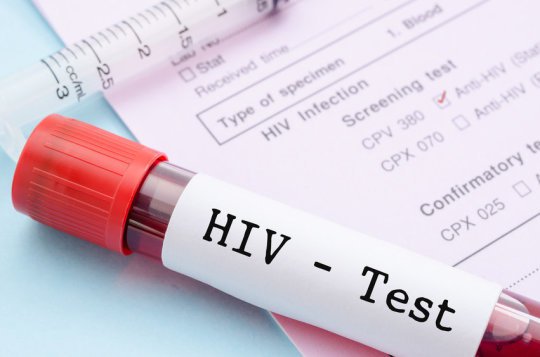
Gene editing strategy eliminates HIV-1 infection in live animals

Scientists have demonstrated that HIV-1 replication can be completely shut down and the virus eliminated from infected cells in animals with a powerful gene editing technology known as CRISPR/Cas9.
Credit: © gamjai / Fotolia


A permanent cure for HIV infection remains elusive due to the virus's ability to hide away in latent reservoirs. But now, scientists show that they can excise HIV DNA from the genomes of living animals to eliminate further infection.

A permanent cure for HIV infection remains elusive due to the virus's ability to hide away in latent reservoirs. But now, in new research published in print May 3 in the journal Molecular Therapy, scientists at the Lewis Katz School of Medicine at Temple University (LKSOM) and the University of Pittsburgh show that they can excise HIV DNA from the genomes of living animals to eliminate further infection. They are the first to perform the feat in three different animal models, including a "humanized" model in which mice were transplanted with human immune cells and infected with the virus.
The team is the first to demonstrate that HIV-1 replication can be completely shut down and the virus eliminated from infected cells in animals with a powerful gene editing technology known as CRISPR/Cas9. The work was led by Wenhui Hu, MD, PhD, currently Associate Professor in the Center for Metabolic Disease Research and the Department of Pathology (previously in the Department of Neuroscience) at LKSOM; Kamel Khalili, PhD, Laura H. Carnell Professor and Chair of the Department of Neuroscience, Director of the Center for Neurovirology, and Director of the Comprehensive NeuroAIDS Center at LKSOM; and Won-Bin Young, PhD. Dr. Young was Assistant Professor in the Department of Radiology at the University of Pittsburgh School of Medicine at the time of the research. Dr. Young recently joined LKSOM.
The new work builds on a previous proof-of-concept study that the team published in 2016, in which they used transgenic rat and mouse models with HIV-1 DNA incorporated into the genome of every tissue of the animals' bodies. They demonstrated that their strategy could delete the targeted fragments of HIV-1 from the genome in most tissues in the experimental animals.
"Our new study is more comprehensive," Dr. Hu said. "We confirmed the data from our previous work and have improved the efficiency of our gene editing strategy. We also show that the strategy is effective in two additional mouse models, one representing acute infection in mouse cells and the other representing chronic, or latent, infection in human cells."
In the new study, the team genetically inactivated HIV-1 in transgenic mice, reducing the RNA expression of viral genes by roughly 60 to 95 percent, confirming their earlier findings. They then tested their system in mice acutely infected with EcoHIV, the mouse equivalent of human HIV-1.
"During acute infection, HIV actively replicates," Dr. Khalili explained. "With EcoHIV mice, we were able to investigate the ability of the CRISPR/Cas9 strategy to block viral replication and potentially prevent systemic infection." The excision efficiency of their strategy reached 96 percent in EcoHIV mice, providing the first evidence for HIV-1 eradication by prophylactic treatment with a CRISPR/Cas9 system.
In the third animal model, latent HIV-1 infection was recapitulated in humanized mice engrafted with human immune cells, including T cells, followed by HIV-1 infection. "These animals carry latent HIV in the genomes of human T cells, where the virus can escape detection," Dr. Hu explained. Following a single treatment with CRISPR/Cas9, viral fragments were successfully excised from latently infected human cells embedded in mouse tissues and organs.
In all three animal models, the researchers utilized a recombinant adeno-associated viral (rAAV) vector delivery system based on a subtype known as AAV-DJ/8. "The AAV-DJ/8 subtype combines multiple serotypes, giving us a broader range of cell targets for the delivery of our CRISPR/Cas9 system," Dr. Hu said. They also re-engineered their previous gene editing apparatus to now carry a set of four guide RNAs, all designed to efficiently excise integrated HIV-1 DNA from the host cell genome and avoid potential HIV-1 mutational escape.
To determine the success of the strategy, the team measured levels of HIV-1 RNA and used a novel live bioluminescence imaging system. "The imaging system, developed by Dr. Young while at the University of Pittsburgh, pinpoints the spatial and temporal location of HIV-1-infected cells in the body, allowing us to observe HIV-1 replication in real-time and to essentially see HIV-1 reservoirs in latently infected cells and tissues," Dr. Khalili explained.
The new study marks another major step forward in the pursuit of a permanent cure for HIV infection. "The next stage would be to repeat the study in primates, a more suitable animal model where HIV infection induces disease, in order to further demonstrate elimination of HIV-1 DNA in latently infected T cells and other sanctuary sites for HIV-1, including brain cells," Dr. Khalili said. "Our eventual goal is a clinical trial in human patients."

Tuesday, April 25, 2017

Mission control: Salty diet makes you hungry, not thirsty

Salty snacks. Surprisingly, in the long run, a salty diet causes people to drink less.
Credit: © fotofabrika / Fotolia


New studies show that salty food diminishes thirst while increasing hunger, due to a higher need for energy

We've all heard it: eating salty foods makes you thirstier. But what sounds like good nutritional advice turns out to be not true in the long run. In a study carried out during a simulated mission to Mars, an international group of scientists has found exactly the opposite to be true. 'Cosmonauts' who ate more salt retained more water, weren't as thirsty, and needed more energy.

For some reason, no one had ever carried out a long-term study to determine the relationship between the amount of salt in a person's diet and his drinking habits. Scientists have known that increasing a person's salt intake stimulates the production of more urine -- it has simply been assumed that the extra fluid comes from drinking. Not so fast! say researchers from the German Aerospace Center (DLR), the Max Delbrück Center for Molecular Medicine (MDC), Vanderbilt University and colleagues around the world. Recently they took advantage of a simulated mission to Mars to put the old adage to the test. Their conclusions appear in two papers in the current issue of The Journal of Clinical Investigation.
What does salt have to do with Mars? Nothing, really, except that on a long space voyage conserving every drop of water might be crucial. A connection between salt intake and drinking could affect your calculations -- you wouldn't want an interplanetary traveler to die because he liked an occasional pinch of salt on his food. The real interest in the simulation, however, was that it provided an environment in which every aspect of a person's nutrition, water consumption, and salt intake could be controlled and measured.
The studies were carried out by Natalia Rakova (MD, PhD) of the Charité and MDC and her colleagues. The subjects were two groups of 10 male volunteers sealed into a mock spaceship for two simulated flights to Mars. The first group was examined for 105 days; the second over 205 days. They had identical diets except that over periods lasting several weeks, they were given three different levels of salt in their food.
The results confirmed that eating more salt led to a higher salt content in urine -- no surprise there. Nor was there any surprise in a correlation between amounts of salt and overall quantity of urine. But the increase wasn't due to more drinking -- in fact, a salty diet caused the subjects to drink less. Salt was triggering a mechanism to conserve water in the kidneys.
Before the study, the prevailing hypothesis had been that the charged sodium and chloride ions in salt grabbed onto water molecules and dragged them into the urine. The new results showed something different: salt stayed in the urine, while water moved back into the kidney and body. This was completely puzzling to Prof. Jens Titze, MD of the University of Erlangen and Vanderbilt University Medical Center and his colleagues. "What alternative driving force could make water move back?" Titze asked.
Experiments in mice hinted that urea might be involved. This substance is formed in muscles and the liver as a way of shedding nitrogen. In mice, urea was accumulating in the kidney, where it counteracts the water-drawing force of sodium and chloride. But synthesizing urea takes a lot of energy, which explains why mice on a high-salt diet were eating more. Higher salt didn't increase their thirst, but it did make them hungrier. Also the human "cosmonauts" receiving a salty diet complained about being hungry.
The project revises scientists' view of the function of urea in our bodies. "It's not solely a waste product, as has been assumed," Prof. Friedrich C. Luft, MD of the Charité and MDC says. "Instead, it turns out to be a very important osmolyte -- a compound that binds to water and helps transport it. Its function is to keep water in when our bodies get rid of salt. Nature has apparently found a way to conserve water that would otherwise be carried away into the urine by salt."
The new findings change the way scientists have thought about the process by which the body achieves water homeostasis -- maintaining a proper amount and balance. That must happen whether a body is being sent to Mars or not. "We now have to see this process as a concerted activity of the liver, muscle and kidney," says Jens Titze.
"While we didn't directly address blood pressure and other aspects of the cardiovascular system, it's also clear that their functions are tightly connected to water homeostasis and energy metabolism."

What Your Opinion ?

Watching too much television could cause fatal blood clots

  Spending too much time in front of the television could increase your chance of developing potentially fatal blood clots known as ve...